

Skip to main content Skip to search Skip to category navigation Skip to footer

Neoprene Boots & Gloves

Looking for warm winter boots or gloves that let you grip your bar and boom comfortably? At Surfpirates, you'll find neoprene boots and gloves from ION, Mystic, XCEL, Rip Curl, Prolimit and Soöruz. Here's how the different designs

Read more
Neoprene boots and gloves for your...
Skip to sorting and filters

Discover our range

70 Items

70 Items

Neoprene boots and gloves for your sessions

Looking for warm winter boots or gloves that let you grip your bar and boom comfortably? At Surfpirates, you'll find neoprene boots and gloves from ION, Mystic, XCEL, Rip Curl, Prolimit and Soöruz. Here's how the different designs compare and what to look for when trying them on.
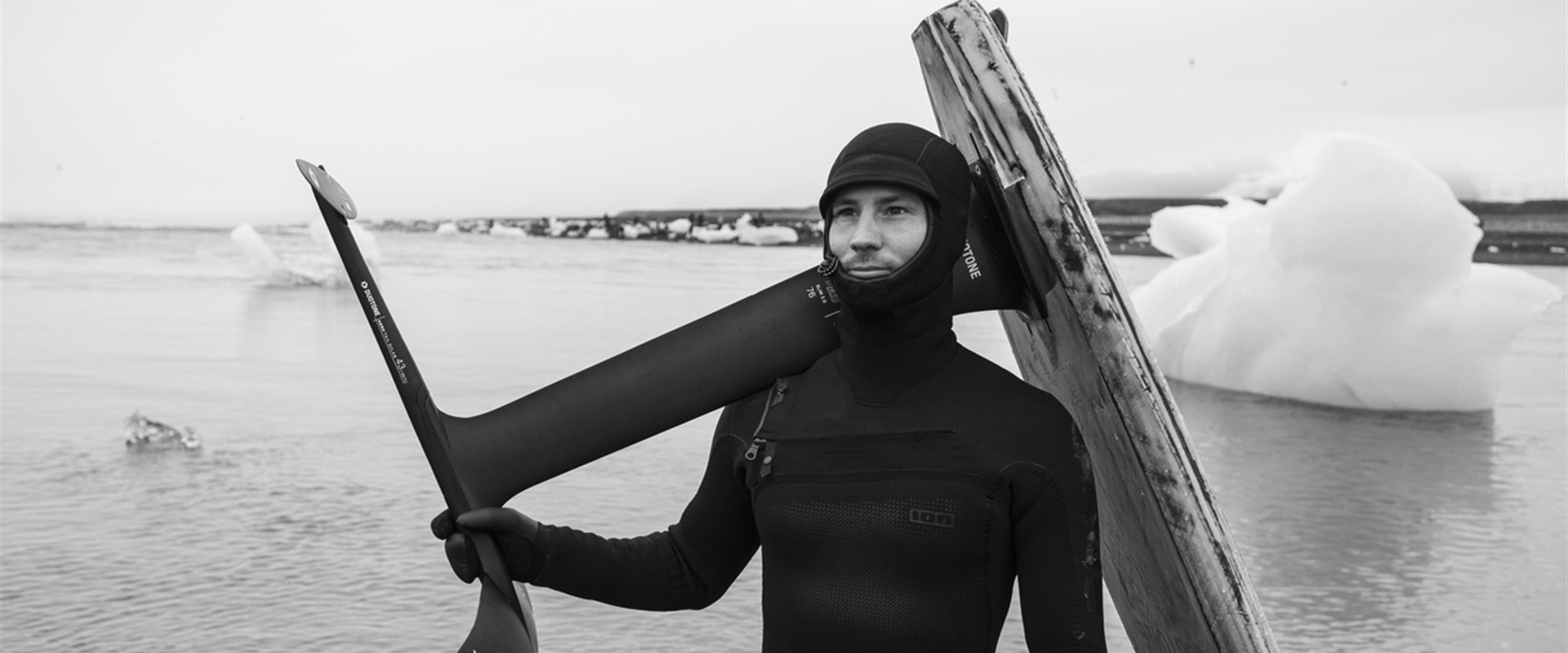
Foiler wearing an ION neoprene hood and gloves on an icy coast

Neoprene boots: split toe or round toe?

Split-toe boots separate your big toe from the others. The divider can help prevent your foot from twisting too much inside the boot. Hidden split-toe designs have this divider inside while the boot looks unsplit on the outside. Round-toe boots keep all your toes together. They're a good choice if a divider between your toes feels uncomfortable.

A thin, flexible sole gives you a more direct feel for the board. A thicker sole puts more material between your foot and the ground. If you use footstraps, try the boots in them too: you should be able to get your feet in and out easily.

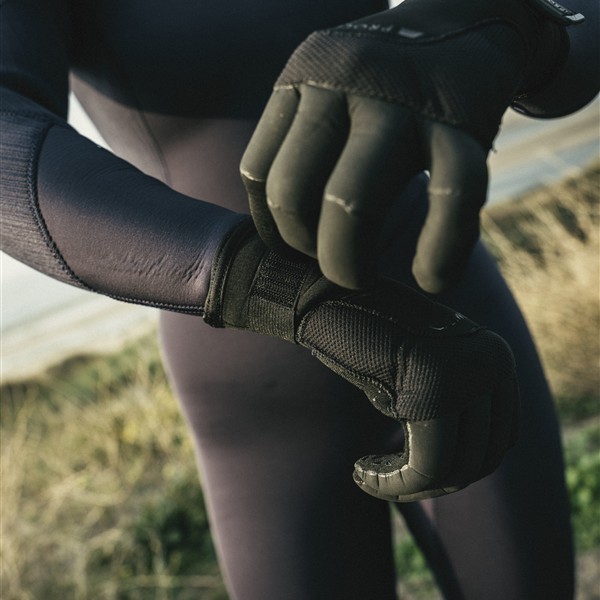
Putting on Prolimit neoprene gloves

Neoprene gloves: five fingers, lobster or mittens?

Five-finger gloves let you move each finger separately, which helps with fasteners and gripping. Three-finger models, often called lobster gloves, usually keep the thumb and index finger separate and group the other three fingers together. Mittens put all four fingers in one compartment. Fingers kept together stay warmer, but precise movements become harder.

Pre-curved gloves are useful for holding a bar, boom or wing handle: their shape already resembles a closed hand, so you work less against the neoprene when gripping. Open-palm models leave your palm bare for direct contact with the grip. Closed gloves cover your whole hand and are a warmer starting point when your hands are frequently immersed.

Which neoprene thickness suits your conditions?

Thinner models are worth considering for milder conditions. For boots, 5 mm is a common choice for cool sessions, while 7 mm models offer more material for cold winter days. Gloves come in thicknesses such as 3 mm for more freedom of movement and 5 mm for extra protection from the cold. Thicker gloves can make gripping harder.

Compare linings and seals as well as thickness. A snug cuff lets in less water than a loose opening. Cold hands and feet can also mean your overall setup isn't warm enough. A suitable wetsuit and, in cold water, a hood belong in the picture too.

How to find the right size

Start with your usual shoe size and check whether the model uses EU or US sizing. Stand up when trying the boots on: your toes should lie straight and your heel shouldn't lift noticeably as you walk. Don't automatically buy a size smaller. If your toes curl or the split-toe divider presses against them, the shape or size isn't right.

Pull gloves fully on so they sit between your fingers, then close your hand around a grip. There shouldn't be empty pockets beyond your fingertips, but the material shouldn't pull hard when you grip either. Hold the grip for a few minutes rather than judging the fit only with an open hand.

Can't decide between two models? Tell us whether you kite, windsurf, surf or wingfoil and what conditions you ride in. We'll help you compare shape, thickness and fit.

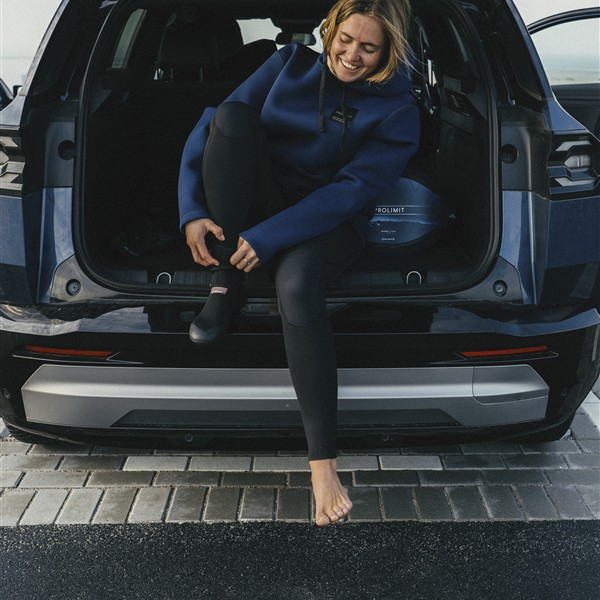
Putting on Prolimit neoprene boots by the car

Questions about neoprene boots and gloves

Are neoprene boots waterproof?

Standard neoprene boots aren't waterproof wellies. Water can enter through the cuff or seams. Their warmth comes from the insulating material and a close fit that limits water flushing through. If lots of fresh water collects in a boot after every short run, first check whether the cuff is too loose or a seam is damaged.

Do I wear boots over or under my wetsuit?

With standard high-cut neoprene boots, the cuff sits beneath the wetsuit leg. Put the boots on and pull the wetsuit legs over them without bunching the cuffs underneath. This helps water run over the outside of the overlap. Designs with special seals may work differently.

Can I wear ordinary socks inside neoprene boots?

We'd leave cotton socks off on the water: they soak up water and take up room inside the boot. Thin neoprene socks are an option for extra warmth. Try them on together with your boots. Your toes must still be able to lie straight without being squeezed.

Why do my forearms tire quickly when I wear gloves?

When gripping, you also have to bend the glove material. Thick or overly tight models take more effort. Try pre-curved gloves and make sure you can close your fingers without strong resistance. An open palm can improve your feel for the grip but leaves that area without neoprene protection.

How do I dry neoprene boots and gloves?

Rinse them with fresh water after your session, drain out the water and open the cuffs. Stand or hang them somewhere shaded and well ventilated. Only turn them inside out if their material and shape allow it without forceful pulling. Avoid radiators and tumble dryers. A cleaner designed for neoprene can help with odours; let everything dry fully before storing it.

Loading ...
Surfpirates Pirates Week from November 20–30, 2026: Extra discounts on many sale items and 15% off RRP, automatically applied at checkout – no discount code needed. Excludes Duotone, Core and Sabfoil. Shop the deals now.