
Skip to main content Skip to search Skip to category navigation Skip to footer

Winter Surfwear

Want to keep kiting, windsurfing or wingfoiling through the colder months? At Surfpirates, you'll find winter surfwear from brands such as ION, Mystic, XCEL, Soöruz, Prolimit and Rip Curl. A warm wetsuit, well-fitting boots, gloves and a

Read more
Winter surfwear: wetsuits and accessories for...
Skip to sorting and filters

Discover our range

264 Items

264 Items

Winter surfwear: wetsuits and accessories for cold sessions

Want to keep kiting, windsurfing or wingfoiling through the colder months? At Surfpirates, you'll find winter surfwear from brands such as ION, Mystic, XCEL, Soöruz, Prolimit and Rip Curl. A warm wetsuit, well-fitting boots, gloves and a hood help you put together your gear for cold water. Neoprene hoodies and base layers add warmth when you need it.
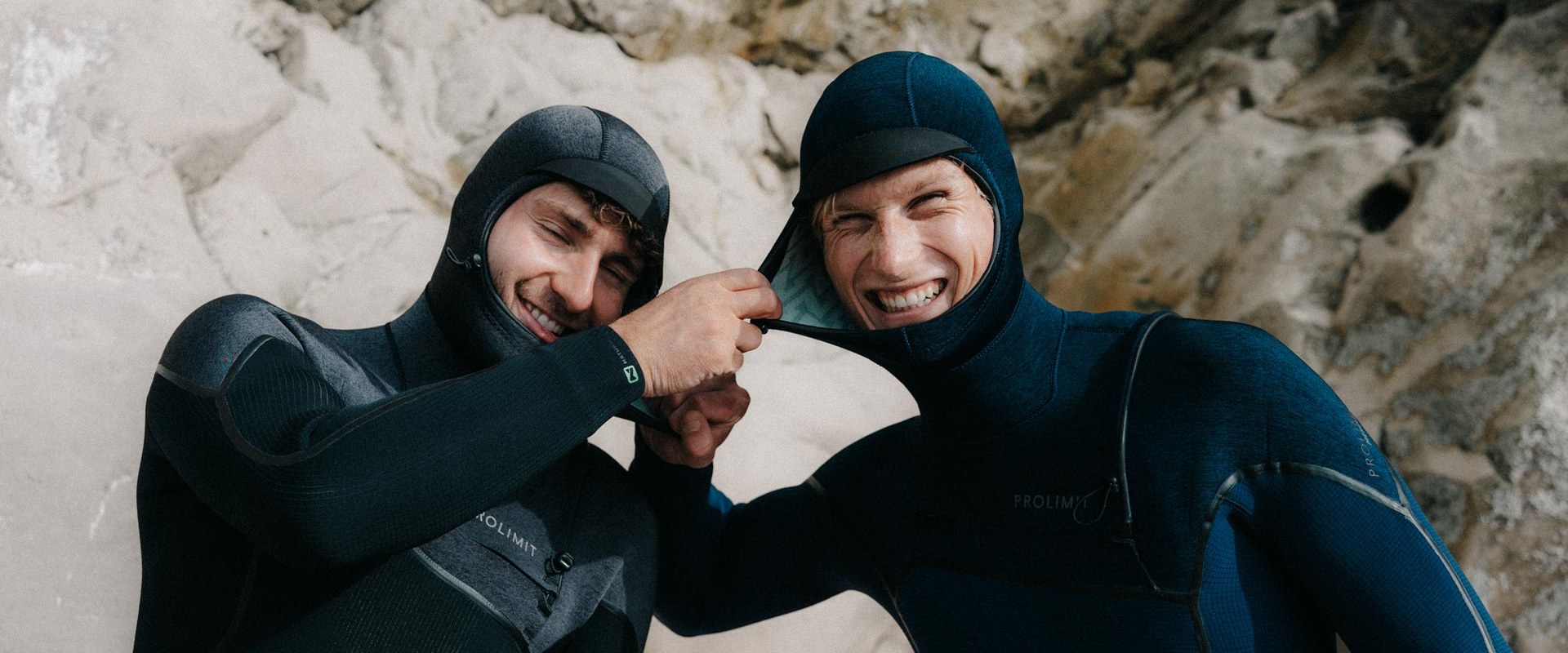

Two surfers wearing Prolimit hooded wetsuits in front of a rock face

Which wetsuit should I choose for winter?

For cold sessions, look for a thick wetsuit with a warm lining. A 5/4 suit can work in milder conditions; for really cold water, thicker hooded suits such as 6/4 or 6/5 mm are worth considering. The numbers describe the material thickness: thicker around your torso and thinner where you need movement. Thickness alone doesn't give you a fixed temperature limit — wind, lining, fit and how easily you feel the cold all play a part.

When trying on a wetsuit, pull it fully up into the crotch and under your arms. Raise your arms and bend your knees. It should fit closely without restricting your shoulders or legs. Large folds across your back and loose openings allow more water to circulate. There's no need to buy your winter wetsuit a size larger just in case.

Hooded wetsuit, separate hood or hooded vest?

A hooded wetsuit has a neoprene hood built in, covering your head and neck. To add coverage to your existing suit, you can use a separate hood. It should fit around your cheeks and neck without pressing on your chin.

A hooded vest combines a hood with a base layer for your torso. You wear it beneath your wetsuit for extra warmth. Try both on together: if they pull under your arms or around your neck, the combination is too tight. A neoprene beanie covers less of your head and neck than a full hood and is better suited to milder conditions.

Warm feet: split-toe or round-toe boots

For winter sessions, neoprene boots come in thicknesses such as 5 or 7 mm. Your toes shouldn't be squeezed, but your foot shouldn't slide around either. Try the boots with the footstraps or bindings you use on the water: thicker boots need more room.

Split-toe boots separate your big toe from the others. This divider can help stop your foot twisting inside the boot. Hidden split-toe boots have an internal divider with an unsplit sole on the outside. Round-toe boots keep all your toes together and suit you if you prefer no divider between them.

Surfer putting on neoprene boots at the boot of a car
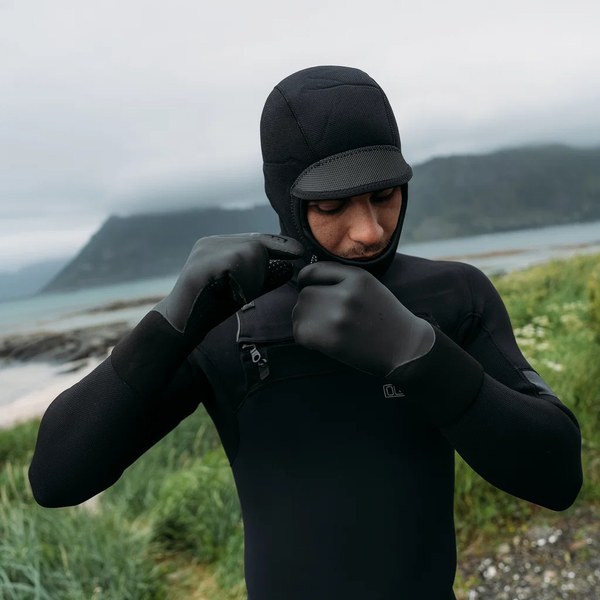
Surfer wearing a neoprene hood and ION lobster gloves

Neoprene gloves: warmth and grip

Five-finger gloves let you move each finger separately, for example when using fasteners or holding the bar. Three-finger gloves, often called lobster gloves, keep the thumb and index finger separate while grouping the remaining fingers together. Mittens group more fingers into one compartment. This adds warmth but makes fine movements harder.

Pre-curved gloves are already shaped for gripping. That means less resistance from the material when you hold a boom or wing handle. Open-palm models give you direct contact with the grip but leave your palms uncovered. Closed-palm models provide more coverage for frequent immersion and very cold conditions.

Combining neoprene hoodies and base layers

A neoprene hoodie or jacket goes over your wetsuit and adds warmth around your torso, especially during windy breaks at the spot. If you want to ride in it, choose a model with enough freedom of movement and suitable access to your harness hook. Your bar, leash and quick release must remain easy to reach.

A close-fitting thermal or neoprene top goes underneath your wetsuit. It shouldn't bunch up or make the suit so tight that gripping and paddling become harder. A base layer alone won't turn a thin summer suit into a winter wetsuit.

Not sure what works with your existing suit? Tell us the model, thickness and conditions at your spot. We can help you work out whether boots, gloves or an extra layer would make a useful addition.

Winter surfwear questions

Is my 4/3 wetsuit warm enough for winter?

We wouldn't recommend a 4/3 as the default choice for cold winter water. A short session in mild weather can feel very different from one in cold wind with frequent falls. For regular winter sessions, a thicker, well-fitting hooded wetsuit is worth considering. Boots and gloves complement it but won't compensate for a suit that's too thin.

What should I wear under my winter wetsuit?

If your suit is warm enough, close-fitting swimwear is all you need. For extra warmth, try a thin thermal top, neoprene top or hooded vest underneath. Put everything on together and move your arms and shoulders. If the suit pulls or the top bunches up, the extra layer doesn't fit well beneath it.

Why do my forearms get tired so quickly in neoprene gloves?

Thick or overly tight gloves can make gripping harder because you have to bend the material with every movement. Try a pre-curved model in a size that lets you close your fingers without strong resistance. Hold a bar or boom for a few minutes while trying them on — you'll feel the difference more clearly than with your hands stretched out.

What's the best way to get changed after a cold session?

Have dry clothes, a towel and a changing poncho ready before your session. A changing mat keeps your feet and wetsuit off the cold, dirty ground. Find somewhere sheltered from the wind, take off your wet suit and dry yourself. Then change straight into dry clothes and warm shoes.

How can I dry my wetsuit before my next session?

Rinse it with fresh water and let it dry inside out in a well-ventilated place. Then turn it the right way out so the outside can dry too. A wide hanger is gentler on the material. Don't put your suit on a radiator or in a tumble dryer. If you ride often, a dryer specifically designed for wetsuits can be useful.

How long can I stay on the water in winter?

There's no single number of minutes that works for everyone. Plan short sessions and an easy route back to shore. End your session if you start feeling cold or your fingers struggle to grip. In cold water, go out with others and stay close to shore — a warm wetsuit doesn't replace that planning.

Loading ...
Surfpirates Pirates Week from November 20–30, 2026: Extra discounts on many sale items and 15% off RRP, automatically applied at checkout – no discount code needed. Excludes Duotone, Core and Sabfoil. Shop the deals now.