Which type of kite suits your riding style?
All-round and freeride
A freeride kite is our recommendation if you want one model for relaxed riding, going upwind and learning to jump. It can handle occasional wave sessions too. Three struts alone don't make a beginner kite, though: this construction covers everything from easy-going freeriders to sporty performance kites.
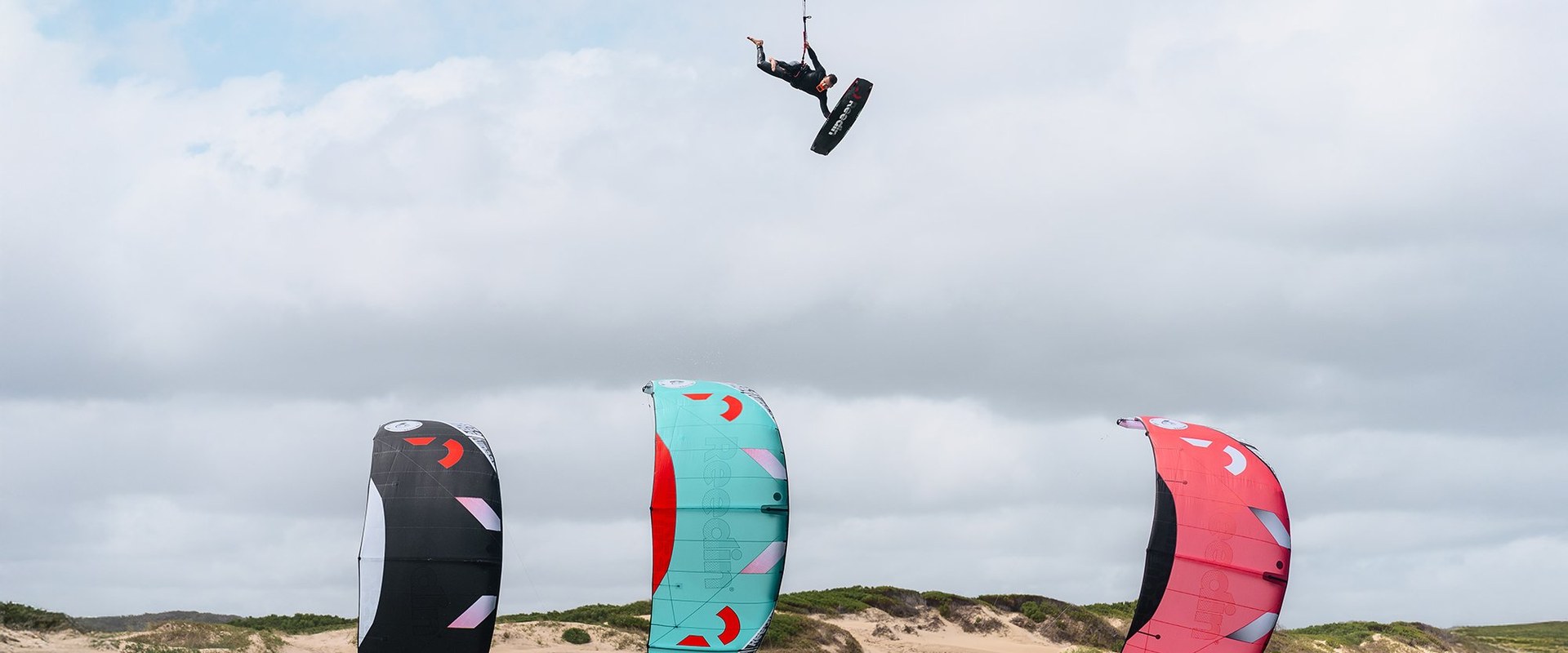
Big Air kites: maximum height and hangtime
Big Air kites are all about high jumps and long hangtime – plenty of time in the air. Traditional Big Air kites often have five struts. These support the profile and help it hold its shape in strong wind and under high loads.
A more elongated shape with a higher aspect ratio is typical: the kite is wider relative to its depth. This supports plenty of lift and long periods in the air. Extra struts can add weight compared with a similarly built 3-strut kite, which becomes noticeable in light wind. Materials and the overall construction also play a part.
In stronger wind, many of these kites come into their own, delivering control, height and hangtime. Modern Big Air models are also available with three struts, however.
Freestyle kites: tricks and precise control
Freestyle kites focus on tricks, powerful take-offs and precise control. In unhooked freestyle, you ride with the chicken loop unhooked. You want good pop – a strong take-off from the board's edge – and slack: a brief reduction in line tension that makes tricks and passing the bar behind your back easier.
Traditional freestyle kites often have five struts and a C-shape for a direct feel. They tend to be more demanding than freeride kites and less focused on long hangtime. Their strengths are technical tricks and powerful take-offs.
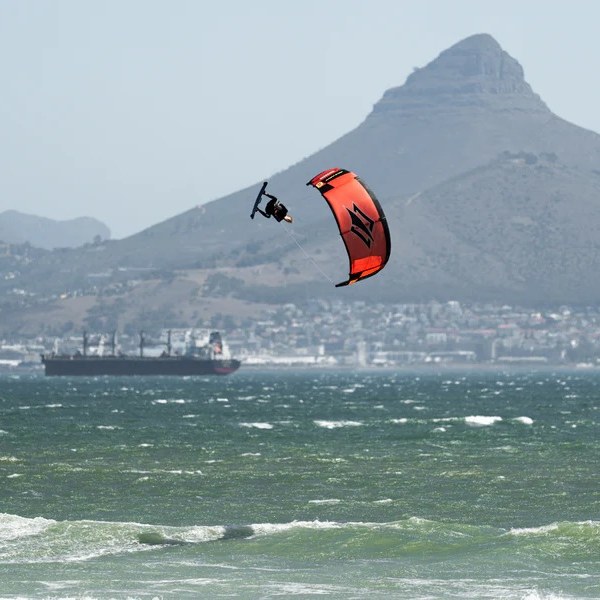
Wave kites: control in the surf
Quick turning, good drift and precise control matter in wave riding. A wave kite should follow you as you ride down the wave, even when line tension briefly drops. It should keep flying steadily while generating as little extra pull as possible.
Traditional wave kites often have three struts and a compact shape for quick changes of direction. Compared with freeride kites, there's more emphasis on drift, direct handling and easily controlled depower. That lets you reduce the pull and focus on the wave with your directional board.
Light-wind kites: more sessions in lighter conditions
A light-wind kite lets you get on the water in lighter conditions. These kites are designed to generate useful pull early and fly steadily in light wind.
Many light-wind inflatable kites have one to three struts and a particularly light construction. Compared with traditional freeride kites, they often offer better low-end performance: they generate usable pull in less wind. Larger kites with plenty of canopy area are also popular, particularly paired with a larger board.
Foil kites: light, efficient and versatile
Foil kites, also known as soft kites, get their shape from air-filled cells rather than inflated tubes and struts. Many models are light and efficient, making them interesting for light wind. For kitesurfing, you need a model specifically suitable for use on the water.
Depending on the model, their strengths include getting going early, strong upwind performance and long hangtime. They're often used for kitefoiling, but can do much more: the Flysurfer Sonic 5 specifically targets ambitious Big Air riders, delivering plenty of lift and long periods in the air. That also makes it interesting for airstyle tricks.