Skip to main content Skip to search Skip to category navigation Skip to footer

Pumpfoil Boards

Do you want to learn your first dock starts or cover longer distances while pump foiling? Then you need a setup in which the board and foil really work together. We explain which board size, front wing and mast length suit your weight and

Read more
Skip to sorting and filters

Discover our range

18 Items

Buy a pump foil board: how to find the right setup

Do you want to learn your first dock starts or cover longer distances while pump foiling? Then you need a setup in which the board and foil really work together. We explain which board size, front wing and mast length suit your weight and skill level – and how to decide whether a complete set or a single board is the better choice.

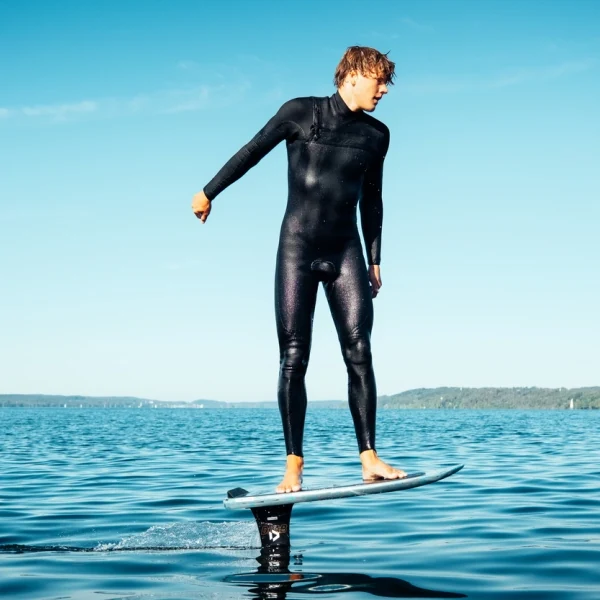
Pump foil board during classic pump foiling on the water

Buy a pump foil: single board or complete set?

If you do not yet own a foil suitable for pumping, the best way to start is with a complete pump foil set. The components are matched, so you avoid a front wing that lifts early but creates unnecessary drag once you start pumping. A single pump foil board is the right choice if you already own a suitable foil and have confirmed that the mast mount, front wing, stabiliser and adjustment range are fully compatible.

Surfpirates recommendation for beginners weighing 60 to 85 kg, starting from a dock and without existing equipment: Choose a progression set with a compact 10 to 15-litre board and a pump-specific front wing suited to your weight. Around 1,500 to 1,600 cm² is a useful starting point for riders weighing about 60 to 70 kg; for roughly 70 to 85 kg, look at 1,650 to 1,800 cm², paired with the intended stabiliser and a stiff mast between 65 and 75 cm. This gives you controlled lift at low speed while retaining enough glide to progress towards longer pumping distances.

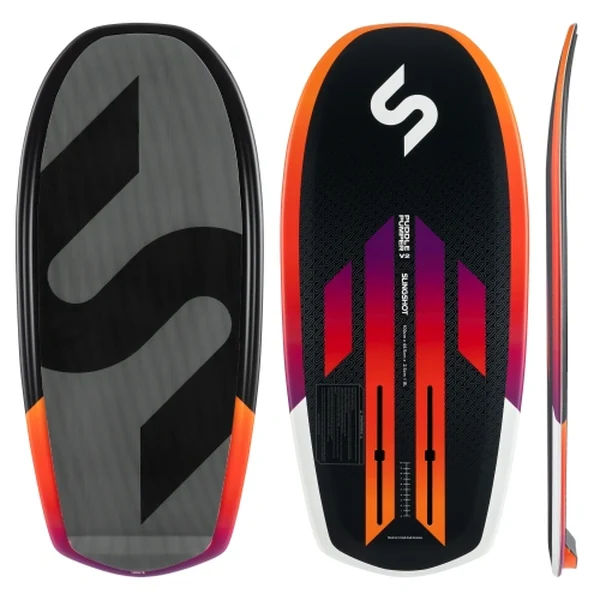
Compact pump foil board shown from the top, bottom and side

Which pump foil board size suits you?

  • 8 to 10 litres: dedicated dock-start and pump boards with minimum swing weight. A good choice for experienced foilers or beginners who want a particularly compact and durable specialist board.
  • 10 to 15 litres: our recommendation for beginners weighing 60 to 85 kg. The slightly larger standing area makes it easier to repeat your foot position without making the board unnecessarily sluggish.

More important than the litre figure

At the dock, you need a board that is easy to grip and position accurately. On the water, low weight and high stiffness transfer your pumping movement directly to the foil. A slightly raised nose and well-designed rails help when the board briefly touches the surface. For riders in this weight range, a 10 to 15-litre board works well because it balances compact dimensions, usable standing area and low swing weight – not because of its buoyancy.

Which foil suits your pump foil board?

Why a true pump foil front wing makes a difference

When pump foiling, you want to carry momentum from every movement. A good pump foil front wing therefore glides for longer and loses as little speed as possible between pumps. Its typically elongated mid- to high-aspect shape differs clearly from many more compact all-round wing foil wings, which focus more on turning and getting started with a wing.

Do not look at surface area alone. Wingspan, aspect ratio and profile also determine how early the wing generates lift, how steadily it runs and how much effort the next pump requires.

Which front-wing size suits you?

  • Around 60 to 70 kg: Around 1,500 to 1,600 cm² gives you a good blend of early lift, control and sufficient speed.
  • Around 70 to 85 kg: Around 1,650 to 1,800 cm² makes take-off easier and keeps you gliding steadily even at low speed.
  • With confident pumping technique: Around 1,450 to 1,600 cm² feels faster and more agile, but requires greater precision during the dock start and in your pumping rhythm.
  • Over about 85 kg: Around 1,800 to 1,900 cm² is often the more suitable choice. The actual wing shape and the manufacturer's tuning remain decisive.

Match the stabiliser and mast properly

The front wing and stabiliser should work as a matched combination. A larger or more lift-oriented tail steadies the foil around the pitch axis and adds confidence while learning, but usually creates a little more drag. A smaller stabiliser feels freer and more direct, but demands better feel and cleaner technique.

For mast length, 65 to 75 cm is a sensible range for beginners. A mast of around 70 to 72 cm gives a good balance of direct control, moderate leverage and sufficient height reserve at many dock-start spots. Very long masts provide more clearance above the surface, but make take-off and pumping more demanding.
Three typical buying profiles

First dock start, no equipment yet

Choose a matched set with a 10 to 15-litre board, a front wing suited to your weight and a 65 to 75 cm mast. This makes the first dock starts easier without forcing you to replace the setup as soon as you make progress.

You already have foiling experience

An 8 to 12-litre board with an efficient front wing around 1,500 to 1,600 cm² responds more directly and feels faster. This combination suits riders who already control the dock start, ride height and pumping rhythm.

Planning to paddle up or ride downwind

Do not buy a classic dock-start board. You need a longer, narrower shape with substantially more volume that you can paddle onto the foil from the water. This is a different board category.

Discover downwind foilboards
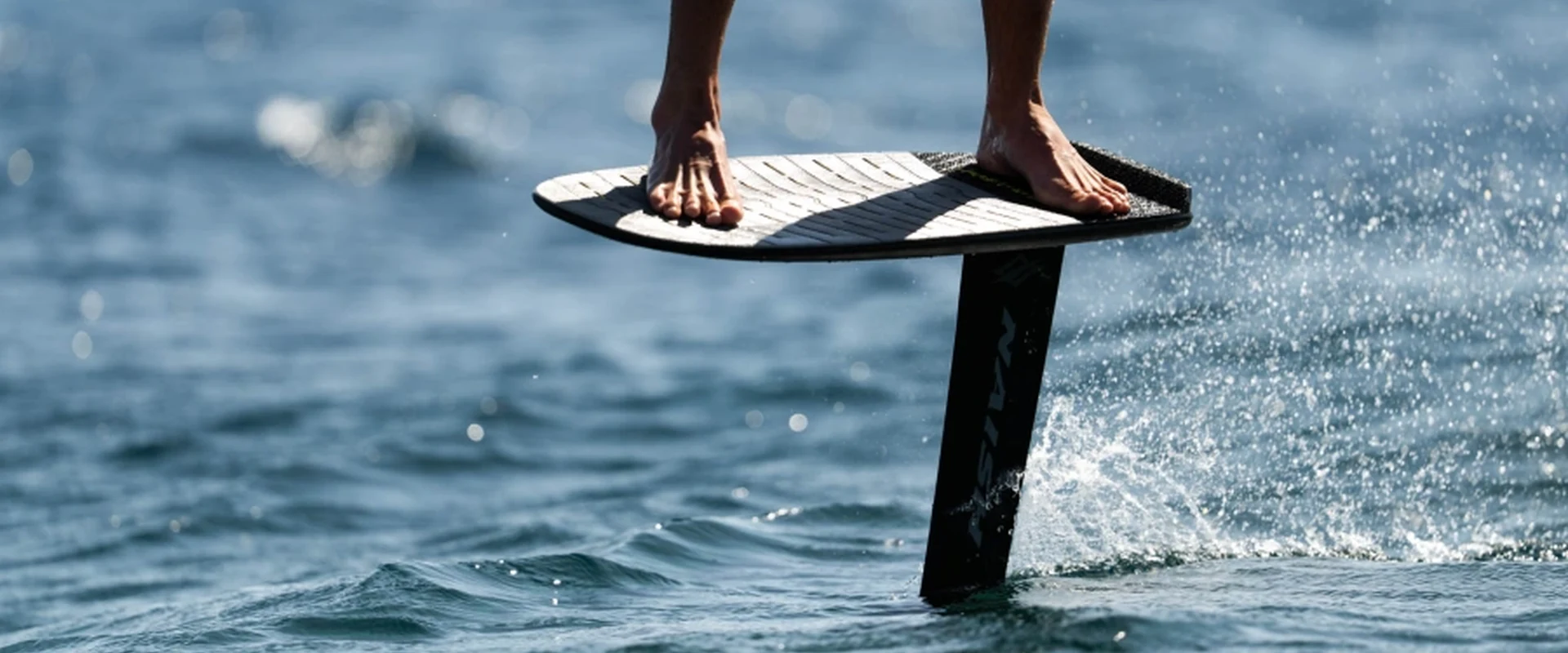
Rider on a compact pump foil board during dock-start pump foiling

Pump foil pre-purchase check

  • Launch method: A dock, jetty or platform calls for a compact pump board; paddle-up requires length and volume.
  • Rider weight: primarily affects the front-wing size, rather than board volume alone.
  • Skill level: Beginners choose more low-end lift; experienced riders can go smaller and faster.
  • Compatibility: The mast, fuselage, front wing and stabiliser must be approved for use together within the system.
  • Progression: A progression set should make learning easier without becoming too slow or draggy after your first successful starts.

Tell us your weight, foiling experience, intended launch method and which components you already own. We will narrow down the options with you, so you end up with a setup that works at the dock and on the water, not just on paper.

FAQ – choosing the right pump foil board and set

Which board size is suitable for beginners weighing 60 to 85 kg?

For beginners learning classic dock starts, we recommend around 10 to 15 litres. Riders who already foil confidently and want a dedicated specialist board can choose around 8 to 12 litres. Standing area, weight and stiffness matter more than one litre figure.

Which front-wing size suits riders weighing 60 to 85 kg?

For 60 to 70 kg, around 1,500 to 1,600 cm² is a useful starting point. For 70 to 85 kg, around 1,650 to 1,800 cm² makes take-off and low-speed gliding easier. Areas from different wing shapes and manufacturers cannot be compared directly.

Can I use my wing foil for pump foiling?

Sometimes, but a large wing foil front wing is not automatically efficient for pumping. Check the aspect ratio, profile, stabiliser, mast length and whether the combination is approved. For regular dock starts, a pump-specific foil is usually much easier to learn on.
Is more board volume better for beginners?

Not for dock starts. You launch above the water and do not need buoyancy as you do when wing foiling. Too much volume adds weight and swing mass. A suitable standing area and a stiff, lightweight board help more.

Which mast length is suitable for beginners?

Around 65 to 75 cm is manageable for many beginners. Roughly 70 to 72 cm offers a balanced compromise between lower leverage, sufficient height reserve and versatile use.

Loading ...
Surfpirates Pirates Week from November 20–30, 2026: Extra discounts on many sale items and 15% off RRP, automatically applied at checkout – no discount code needed. Excludes Duotone, Core and Sabfoil. Shop the deals now.