Skip to main content Skip to search Skip to category navigation Skip to footer

Foils

Which front wing suits your intended use, what mast length makes sense, and is carbon really worth it? This buying guide explains foils for wing foiling, pump foiling, SUP and downwind. You get clear guidance for starting out and learn

Read more
Buy foils at Surfpirates: buying advice for...
Skip to sorting and filters

Discover our range

515 Items

515 Items

Buy foils at Surfpirates: buying advice for beginners and progressing riders

Which front wing suits your intended use, what mast length makes sense, and is carbon really worth it? This buying guide explains foils for wing foiling, pump foiling, SUP and downwind. You get clear guidance for starting out and learn which upgrades can make your current setup faster, more efficient or more manoeuvrable. Our team includes experienced foilers who regularly ride and test the equipment. We use that experience to help you choose a well-matched foil setup.

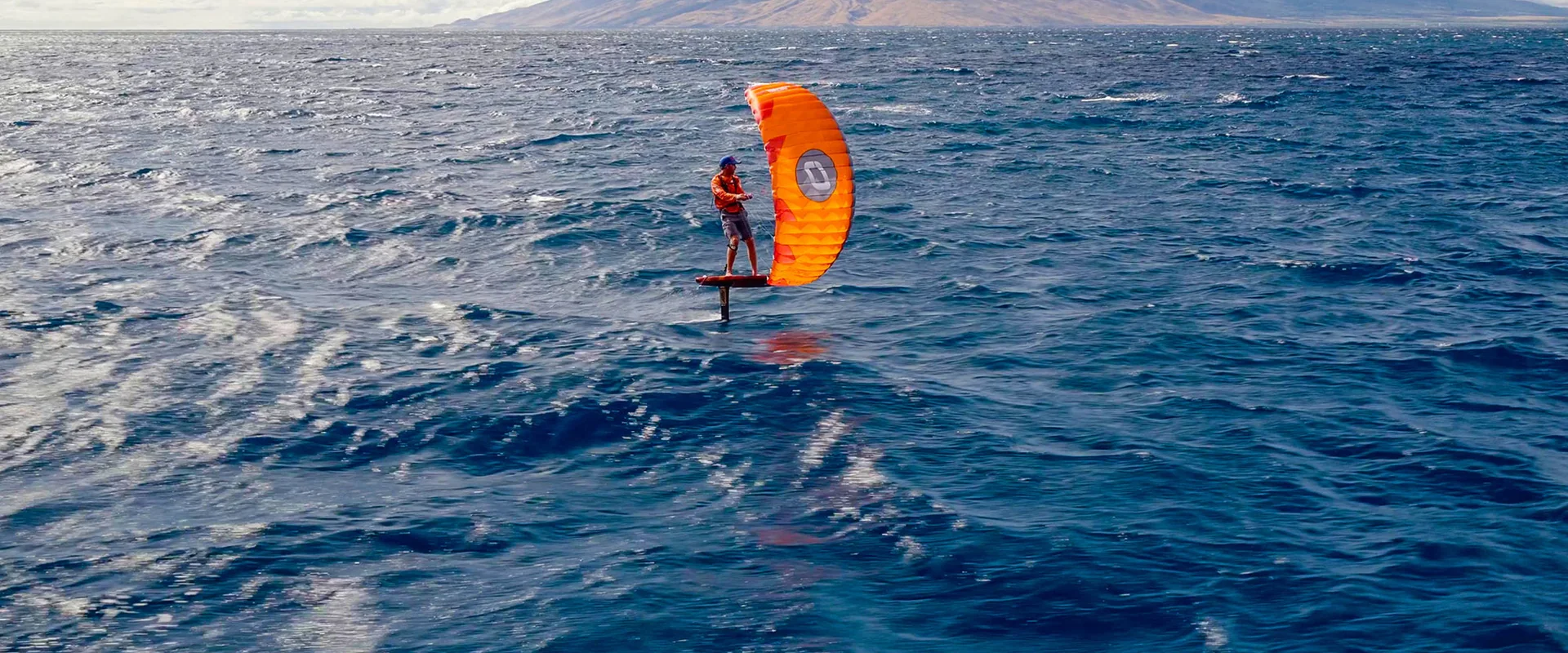
Foiler riding an Afterburner Parawing on open water

How does a foil work?

A foil lifts the board out of the water and thereby reduces resistance. The Front wing generates most of the lift, which Stabilizer or backwing affects balance and pitch fuselage connects both wings and the mast creates distance from the water surface. Only the interaction determines how early the foil takes off, how efficiently it glides and how directly it reacts.

Which setup is right depends on the use: When wing foiling, controllable lift and maneuverability help, when pump foiling, efficient gliding between pumping movements is important, and when SUP or downwind foiling, the foil has to support even at low starting speeds. Beginners benefit from calmness and tolerance for errors; Advanced riders are usually looking for better glide performance, speed or agility.

Which foil setup suits your use?

If you don't yet have a compatible foil system, a complete foil kit is usually the safest purchase decision. Front wing, stabilizer, fuselage, mast and screws are coordinated with each other. Newcomers should first check which individual module makes sense for their existing setup.

UseThat's what mattersRecommended setup
Learn to wing foilEarly, controlled lift and calm pitchMid-aspect front wing, 70 to 80 cm mast, stable foil kit
Progress in wing foilingMore glide, speed or tighter maneuversDepending on the goal, a smaller or more stretched front wing and suitable stabilizer
Pump foilLittle loss of speed between pumping movementsEfficient mid to high aspect wing and stiff, low-drag tuning
SUP and downwindLift at low starting speed and good glidingHigh-lift, efficient front wing suitable for weight, conditions and launch technique

Area and mast length can therefore never be evaluated without discipline, rider weight and skill.

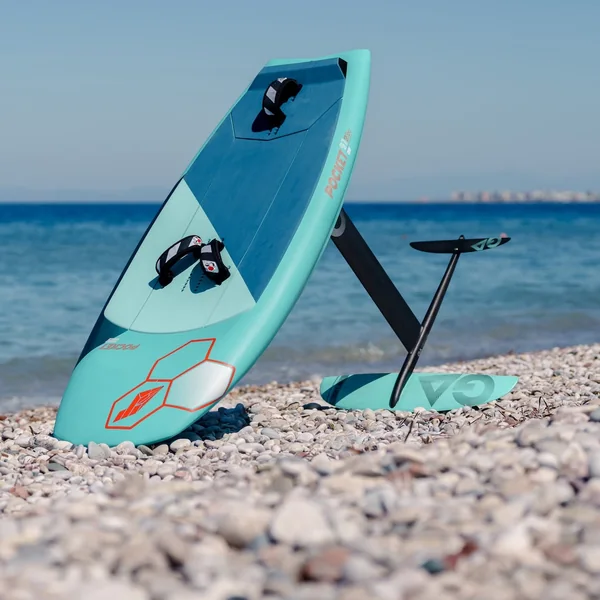
F-One foil with front wing, mast and stabilizer on the beach

Which front wing size and aspect ratio are suitable?

The front wing area should suit the weight, type of launch and use. Even more important is how the profile, span and aspect ratio are tuned. Two wings with the same area can take off and glide at very different times.

Guide for wingfoil beginners

Rider weightRecommended front wingBuying recommendation
Up to around 65 kgapprox. 1,500 to 1,900 cm²Controllable mid-aspect wing; rather smaller when there is a lot of wind
65 to 80 kgapprox. 1,700 to 2,100 cm²Mid aspect with early, even lift
80 to 95 kgapprox. 1,900 to 2,300 cm²More low-end lift without the extremely wide wingspan
Over 95kgapprox. 2,100 to 2,500 cm²Robust entry-level model suitable for the board and area

These areas are an orientation for wing foil beginners. With pump foils and downwind foils, starting technique, required gliding efficiency and speed determine the appropriate size.

Low, mid or high aspect?

  • Low Aspect: compact, maneuverable and strong in lift, but usually with more resistance.
  • Mid aspect: The best mix of early take-off, control and glide for most beginners.
  • High aspect: efficient and smooth, but often requires more precise technique due to the large span.

A high aspect ratio does not automatically mean that a foil will take off sooner. For quick first wing foil successes, a modern mid-aspect wing with a good low end is usually the clearer choice. For pump and downwind foiling, an efficient mid to high aspect wing can make more sense if the technique and take-off speed are suitable.

Which mast length: aluminium or carbon?

The appropriate mast length depends on the foiling discipline, water depth and riding level. For the first wingfoil sessions 70 to 80 cm easy to control; around 75 cm shortens the lever, makes it easier to control the height and limits the fall height. Once you're flying stable, 82 to 85cm is a versatile versatile all-round option for choppy water and more banking. Masts from around 90 cm are more suitable for deep water, higher speeds and advanced riding.

When pump foiling, shorter masts are often chosen because they react more directly and require less water depth for dock launches. Depending on the area, downwind and wave foilers benefit from more height reserve.

MaterialAdvantagesFor whom?
aluminiumInexpensive, robust, good entry pointBeginners, training and riders with a clear price-performance focus
CarbonDepending on the design, it is lighter, stiffer and more directAdvanced, higher loads and performance-focused riders

Carbon is not automatically better: profile, stiffness and workmanship count more than the Material alone. A high-quality aluminium mast may be a more sensible investment when starting out.

Can you mix carbon and aluminium?

Carbon front wing and carbon stabilizer on an aluminium mast are normal in many foil systems. A carbon mast on an aluminium fuselage, on the other hand, only fits if the connection, screws and corrosion protection are coordinated. At Surfpirates, product texts and variants show which components fit together. If you want to combine existing Material, we will check your setup together with you before purchasing.


Which fuselage and which stabilizer are suitable?

A medium to long fuselage calms the foil around the transverse axis and gives beginners more time to shift their weight. Since the length is measured differently depending on the system, beginner-friendly versions are usually between 66 and 74 cm. A short fuselage turns more directly but reacts more sensitively.

The following applies to the stabilizer: A larger or stability-oriented backwing calms the pitch and makes control easier, but usually creates more resistance. A smaller stabilizer feels freer and faster, but requires cleaner footwork.

Two specific combinations

  • Easy to get started: The Slingshot One-Lock Ease 1850 Frontwing is combined with the Verse 270 Stabilizer. The setup is designed for early, predictable lift and high stability.
  • More carving and speed: The Monobloc Tail Carving 158 XS fits the F-One SK8 850. This combination reacts more directly and is aimed more at intermediates with secure foil control.

These examples cannot be generalized to other sizes or product generations. If the right combination is not clearly shown in the shop, we will be happy to help you choose.

View foil fuselagesView stabilizers and back wings

Compatibility, maintenance and subsequent upgrades

When it comes to foils, the same brand name is no guarantee of compatibility. Generation, connection, fuselage series, screw length and approvals must match. Many suitable variants and components are already organized by Surfpirates according to product generation and system. If a combination is not clearly stated, we will be happy to check the connection, generation and required screws before you order.

  • After salt water, rinse with fresh water.
  • Loosen, dry and check connections regularly.
  • Only use approved screws, assembly paste and torques.
  • When upgrading, first adjust the front wing or stabilizer; Mast and fuselage can often remain in a modular system.

You should replace damaged screws or adapters early. Small parts decide whether the entire foil works safely and without play.

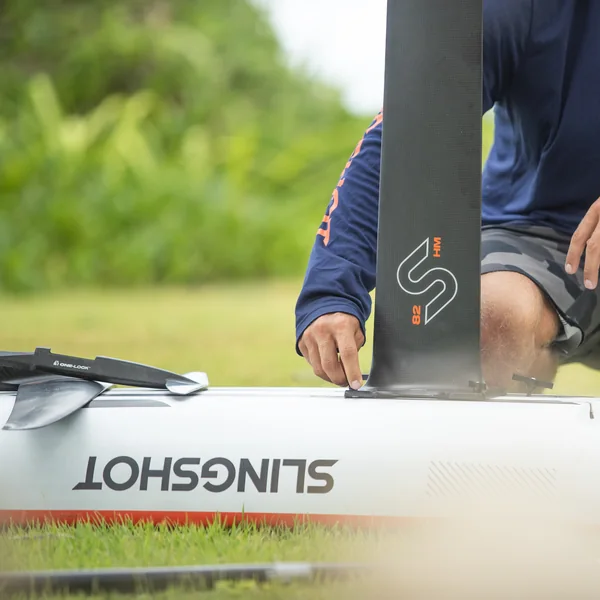
Installing a Slingshot One-Lock foil system on a foilboard

Four clear buying profiles for beginners and progressing riders

Learn to wingfoil

For beginners between around 65 and 85 kg, a coordinated kit with around 1,800 to 2,200 cm² mid-aspect front wing, 75 cm aluminium mast, medium-length to long fuselage and the recommended stability-oriented backwing is a sensible starting point. Lighter riders tend to choose the lower end of the surface area, while heavier riders tend to choose the upper end of the surface area.

Start early and glide for a long time

Choose an efficient mid-aspect wing with a good low end. Don't go unnecessarily wide or short: a controlled lift helps more at the beginning than maximum final speed.

Pump or downwind

Choose according to start type and required gliding efficiency. Pump foils are designed to maintain speed between movements; Downwind foils have to carry early and glide for a long time.

Expand the system in the long term

Look for a modular series with clear compatibility. Start with a suitable complete kit and later add a smaller front wing or stabilizer for more speed.

Foil buying check before ordering

  • Rider weight: primarily determines the required lift of the front wing.
  • Discipline and start type: Wing, dock start or paddle-up have different requirements.
  • Wind range and conditions: Light wind demands more low end; Choppy water benefits from extra mast height.
  • Board and box: Installation, rail length and load capacity must be correct.
  • Driving level: Beginners need predictable lift and pitch stability.
  • Expansion goal: A modular system makes future upgrades easier.

If you tell us discipline, weight, board, area, typical conditions and previous experience, we will narrow down front wing, mast, fuselage and stabilizer together. So you don't buy a foil based on a single number, but rather a setup that works as a system.

Explore all foilsGet personal advice

Frequently asked questions about foils

Which mast length makes sense for wing foil beginners?

For the first sessions, 70 to 80 cm makes sense; around 75 cm is an easily controllable starting point. 82 to 85 cm becomes more interesting as soon as you maintain the altitude safely and need more reserve in choppy water.

What front wing size do I need as a beginner?

As a rough guide, the ranges range from around 1,500 to 1,900 cm² for light riders to around 2,100 to 2,500 cm² for riders over 95 kg. Profile, aspect ratio, wind and the coordination of the entire foil are just as important as the surface.

Which aspect ratio makes sense to get started?

A mid-aspect front wing usually offers the best compromise between early lift, control, maneuverability and glide performance. High Aspect glides more efficiently, but often requires more precise technique due to the larger wingspan.

Is an aluminium or carbon mast better for beginners?

An aluminium mast is sturdy, inexpensive, and a more sensible choice for most beginners. Carbon can be lighter, stiffer and more direct, but is particularly worthwhile if you require higher performance.

Can I mix carbon and aluminium parts on the foil?

Yes, if the components in the respective system are compatible. Carbon wings on an aluminium mast are common; at Surfpirates, the product text and variant selection indicate the right combination. Carbon mast and aluminium fuselage require a suitable connection and, if necessary, electrical isolation to prevent galvanic corrosion.

Which stabilizer or backwing fits the front wing?

Orientate yourself on the combination shown in the shop. If the information is missing, we will check the right stabilizer for your front wing and your riding goal. A larger or stability-oriented stabilizer calms the pitch; A smaller backwing feels freer and faster, but requires more control.

Is a short or long fuselage better?

A medium to long fuselage rides more smoothly and is usually easier for beginners. A shorter fuselage turns more directly, but reacts more sensitively to weight shifts.

Should I buy a foil kit or individual parts?

Without an existing compatible system, a complete kit is the safest choice. Individual parts make sense if you are specifically expanding an existing series. Product text and variants in the shop show you which parts fit together; If you have any questions, we will check your setup with you.

How do I care for a foil made of aluminium and carbon?

After salt water, rinse it with fresh water, disassemble and dry the connections regularly and only use approved screws, assembly paste and torques. This will reduce corrosion and seized connections.

Loading ...
Surfpirates Pirates Week from November 20–30, 2026: Extra discounts on many sale items and 15% off RRP, automatically applied at checkout – no discount code needed. Excludes Duotone, Core and Sabfoil. Shop the deals now.