Skip to main content Skip to search Skip to category navigation Skip to footer

Protection

A missed landing, a fall beside the foil or a knock from your own board: protective gear can make a difference on the water. At Surfpirates, you'll find impact vests, watersports helmets and earplugs for your sessions. Here we explain which

Read more
Watersports protection: vests, helmets and...
Skip to sorting and filters

Discover our range

172 Items

172 Items

Watersports protection: vests, helmets and earplugs

A missed landing, a fall beside the foil or a knock from your own board: protective gear can make a difference on the water. At Surfpirates, you'll find impact vests, watersports helmets and earplugs for your sessions. Here we explain which gear suits your sport, how to check the fit and why a padded vest is not automatically a buoyancy aid.

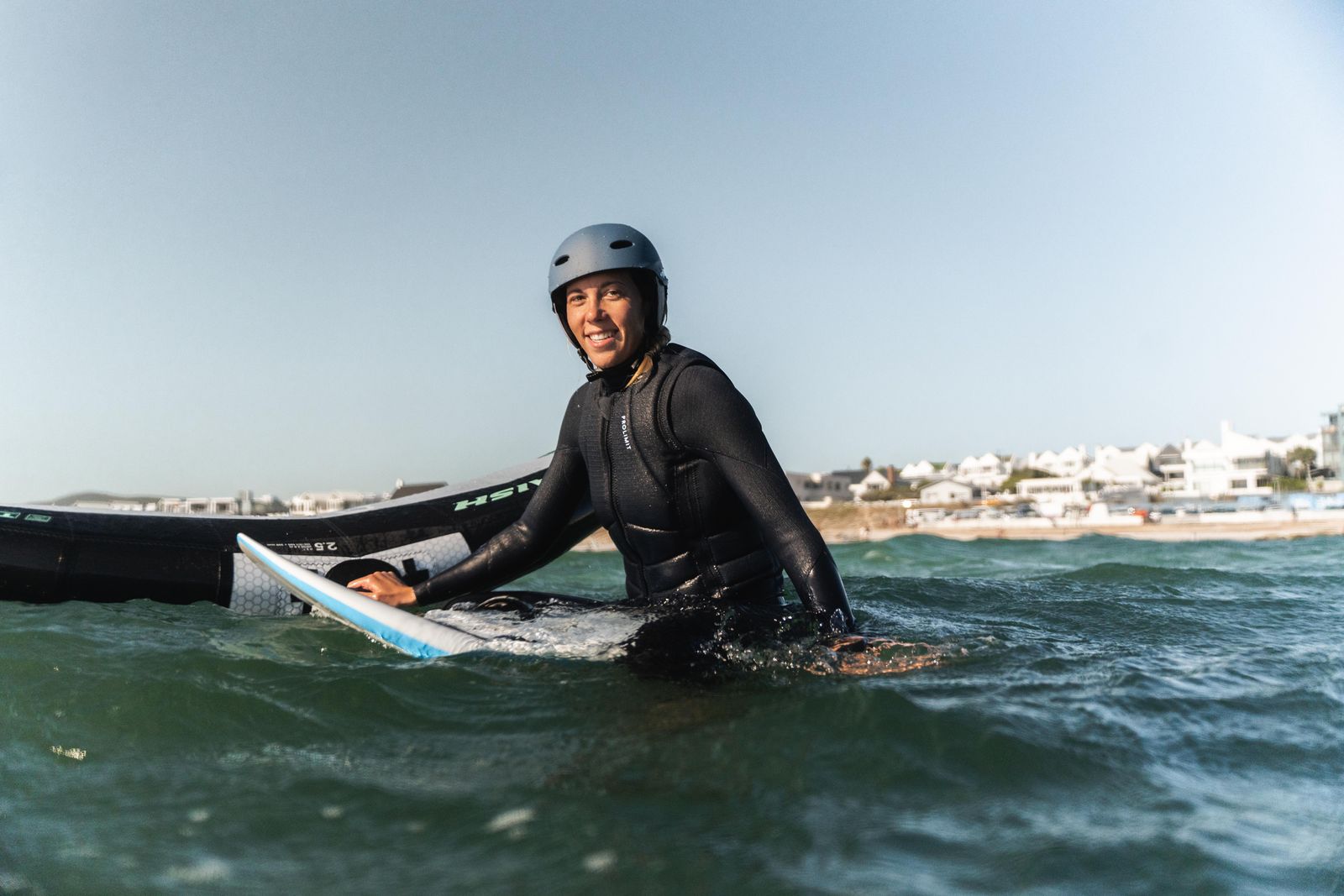
Wingfoiler wearing a helmet and impact vest on the water

Impact vest, buoyancy aid or lifejacket?

An impact vest has padding around the chest, back and sides, depending on the model. The foam can cushion the impact of a fall. The layout of the pads shows you which areas are covered. A dedicated impact vest is not a lifejacket, even if its foam provides some buoyancy.

If you specifically want help staying afloat while swimming, look for a vest labelled as a buoyancy aid, for example to EN ISO 12402-5, performance level 50. These aids are designed for swimmers in sheltered waters with help close at hand. They will not reliably turn an unconscious person face up. A lifejacket has a different purpose: it is designed to keep the mouth and nose above water. Its suitability depends on its performance level and intended use.

Some vests combine impact protection with certified buoyancy. Check the label and product description: does it simply say “Impact Vest”, or does it state a buoyancy rating? Thick padding, a product name or a CE mark alone cannot tell you this.
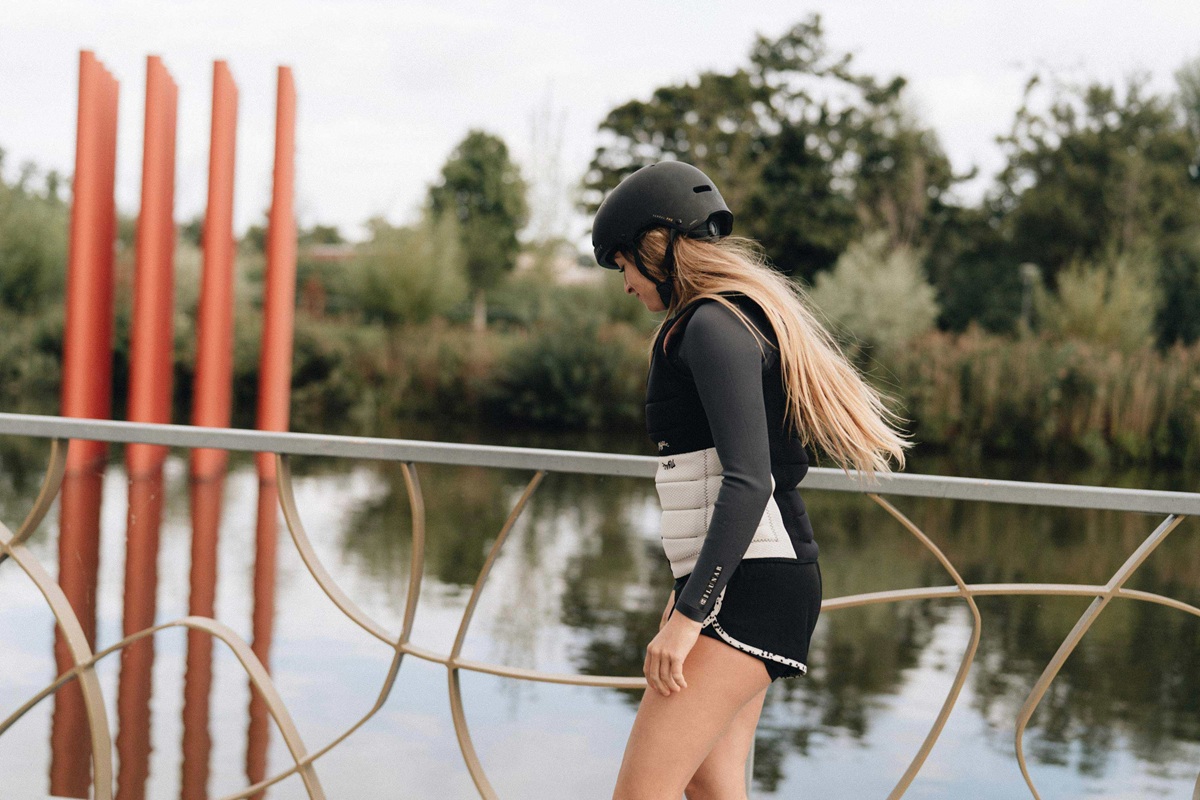
Wakeboarder wearing a Mystic impact vest and helmet on the dock

Which vest suits kitesurfing, wingfoiling and wakeboarding?

For kitesurfing, your waist harness sits around your lower torso. Vests designed for this often leave that area unpadded so the harness can sit snugly. Try both items on together: the harness hook and quick release must remain easily accessible, and the vest must not bunch up above the spreader bar. Harness compatibility also matters for windsurfing.

For wingfoiling, you need freedom of movement when getting onto the board, pumping and reaching overhead. Try these movements when fitting your vest. If you use a wing harness, the vest must work with that too. Padding does not offer reliable protection against cuts from sharp foil edges.

Wakeboard vests often have padding that extends further down because there is no waist harness to accommodate. At a cable park, your vest also needs to meet the park's rules: a dedicated impact vest does not automatically meet a required buoyancy rating. If you use one vest for several sports, compare the cut, padded areas and buoyancy labelling.

How to check the fit of your protective vest

Measure your chest and start with the model's size chart. Try the vest on with the wetsuit you wear on the water. It should fit close to your body without restricting your breathing. Raise your arms, twist your torso and bend forwards. The pads should stay in place throughout.

With the vest fastened, gently pull it upwards at the shoulders. If it slides noticeably towards your chin or ears, it is too loose or the cut does not suit you. A smaller size only makes sense if it does not squeeze your chest or underarms. Trying a different cut can be particularly helpful if the torso length is not right.

A front zip makes a vest easier to put on and take off. Zip-free models pull on over your head; try taking them off as well. You should be able to fasten the vest fully without having to force the material together.

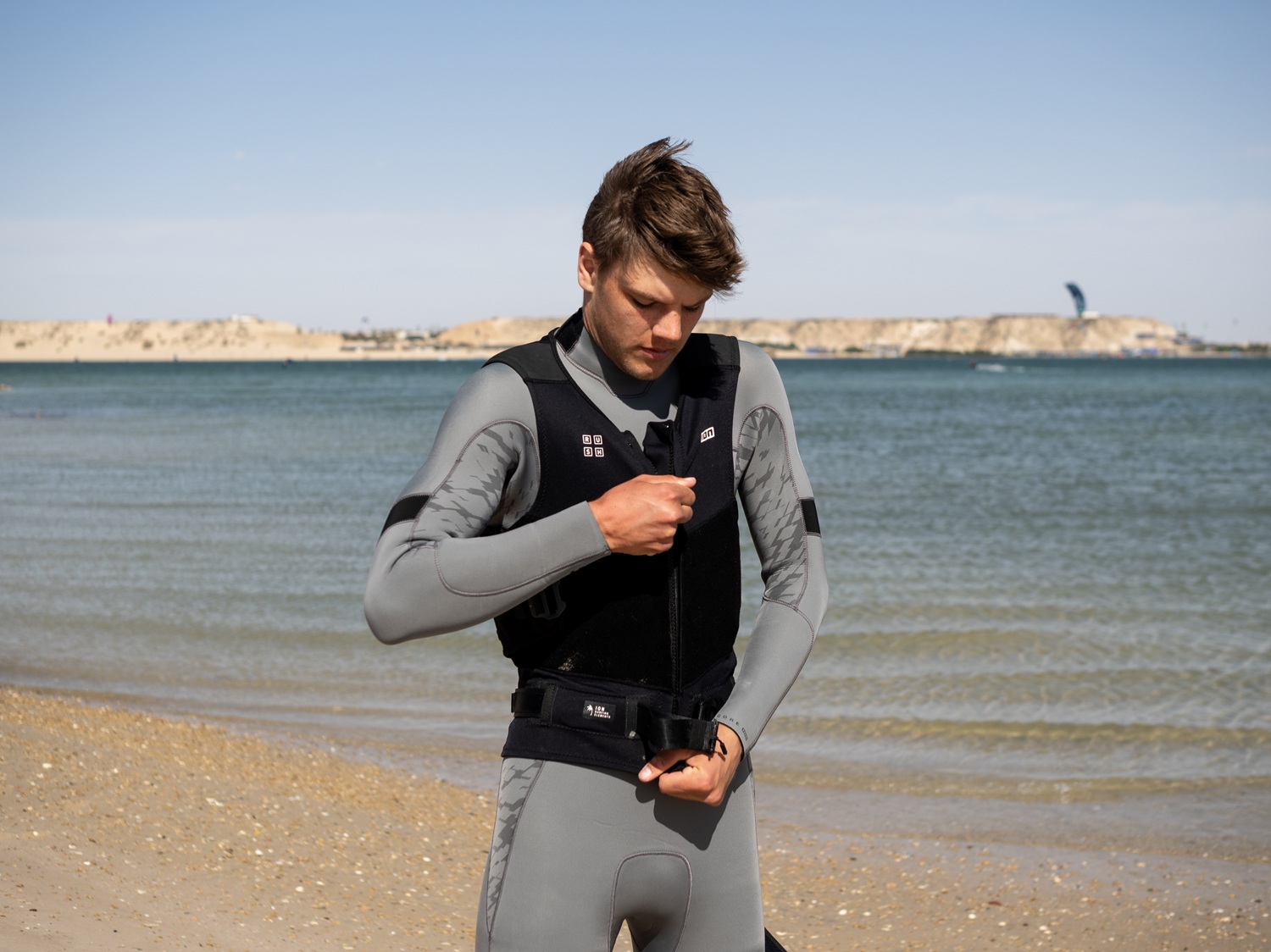
Rider fastening an ION impact vest over a wetsuit

Watersports helmets: a secure fit without pressure points

A watersports helmet can protect your head in a collision with your board or other equipment. Choose a model intended for your sport: drainage, suitable padding and a secure chin fastening matter, along with its stated suitability. A cycling helmet is not automatically suitable for use on the water.

Measure your head circumference above your eyebrows and compare it with the helmet sizing. Place the helmet level on your head, adjust the fit and fasten the chin strap. Shake your head and gently try moving the helmet forwards and backwards. It must not tip over your eyes or slide far back towards your neck. If you feel pressure points, try another size or a different internal shape.

If you wear a neoprene hood, try the helmet on with it and readjust the fit when you ride without the hood. Ear covers must be compatible with the helmet. They do not replace snug-fitting earplugs that keep water out.

Ear protection against water and wind

Watersports earplugs limit water entering the ear canal and protect it from direct wind. Models such as SurfEars allow sound through a special membrane so you can still hear conversations and your surroundings. Hearing can still feel different compared with wearing no plugs.

Choose the right tip for each ear: your left and right ears may need different sizes. The plugs should seal securely and stay in place without pressure. Try them with your helmet or hood to make sure neither pushes against them. Rinse the plugs with fresh water after your session and let them dry before putting them away.

Choosing protection to suit your setup

At Surfpirates, you'll find vests and helmets from brands including ION, Mystic, Prolimit and WIP, plus ear protection from SurfEars. Match your protection to the gear you already use: a kite vest should work with your harness, and a helmet should fit with your winter hood too. If you want extra buoyancy, choose it by checking the relevant rating.

If you're deciding between models, tell us your sport, your spot and which harness you use. That helps us compare suitable cuts and features with you.

Questions about watersports protection

Do I wear my impact vest over or under my wetsuit?

Most standard impact vests are worn over your wetsuit. This makes them easy to put on and lets you check the fit. Special “Under Vests” are designed to be worn underneath. Don't simply squeeze a regular, heavily padded vest under a tight wetsuit: it can create pressure and restrict your movement.

Can I go on the water with an impact vest if I can't swim?

A dedicated impact vest is not suitable for that. Its padding replaces neither swimming ability nor an appropriate lifejacket. A performance level 50 buoyancy aid is also intended for swimmers. If you cannot swim, check with the watersports school before your course about the requirements and which lifejacket you need.

Why does my vest ride up in the water?

It is often too loose, not fully fastened or the wrong cut for your torso. When kitesurfing, your harness can also push the vest upwards. Try it on again with your wetsuit and harness. If you can pull it up to your chin even with every fastening closed, a different cut or a better-fitting size will usually help.

Do I need to replace my helmet after a hard impact?

After a severe impact, you should replace your helmet even if there are no visible cracks. Its shock-absorbing structure may be damaged. Cracks, deformed areas, a faulty chin fastening or damaged straps are also reasons to stop using it. With a second-hand helmet of unknown history, previous impact damage is difficult to rule out.

How do I care for my impact vest?

Rinse salt and sand off with fresh water after your session, then leave the vest to dry in the shade in a ventilated place. Do not use radiators or a tumble dryer. Check the seams, zip and pads at the same time: open seams, torn-out fastenings or pads that have shifted or become permanently compressed can affect its function.

Can I buy a larger protective vest for my child to grow into?

A protective vest needs to fit now. An oversized model can ride up and leave the intended areas unprotected. For buoyancy aids and lifejackets, the stated weight range and size must also suit your child. A child's impact vest is no more automatically a lifejacket than an adult model.

Loading ...
Surfpirates Pirates Week from November 20–30, 2026: Extra discounts on many sale items and 15% off RRP, automatically applied at checkout – no discount code needed. Excludes Duotone, Core and Sabfoil. Shop the deals now.