Skip to main content Skip to search Skip to category navigation Skip to footer

Kiteboards

Looking for your first kiteboard after lessons, or a new board to add to your setup? At Surfpirates, you'll find kiteboards for relaxed freeride sessions, jumps and waves. The right board depends on your weight, ability and the conditions

Read more
Buy kiteboards – find the right board for your...
Skip to sorting and filters

Discover our range

171 Items

171 Items

Buy kiteboards – find the right board for your sessions

Looking for your first kiteboard after lessons, or a new board to add to your setup? At Surfpirates, you'll find kiteboards for relaxed freeride sessions, jumps and waves. The right board depends on your weight, ability and the conditions at your spot. We'll help you understand the differences and find a board you'll enjoy riding.

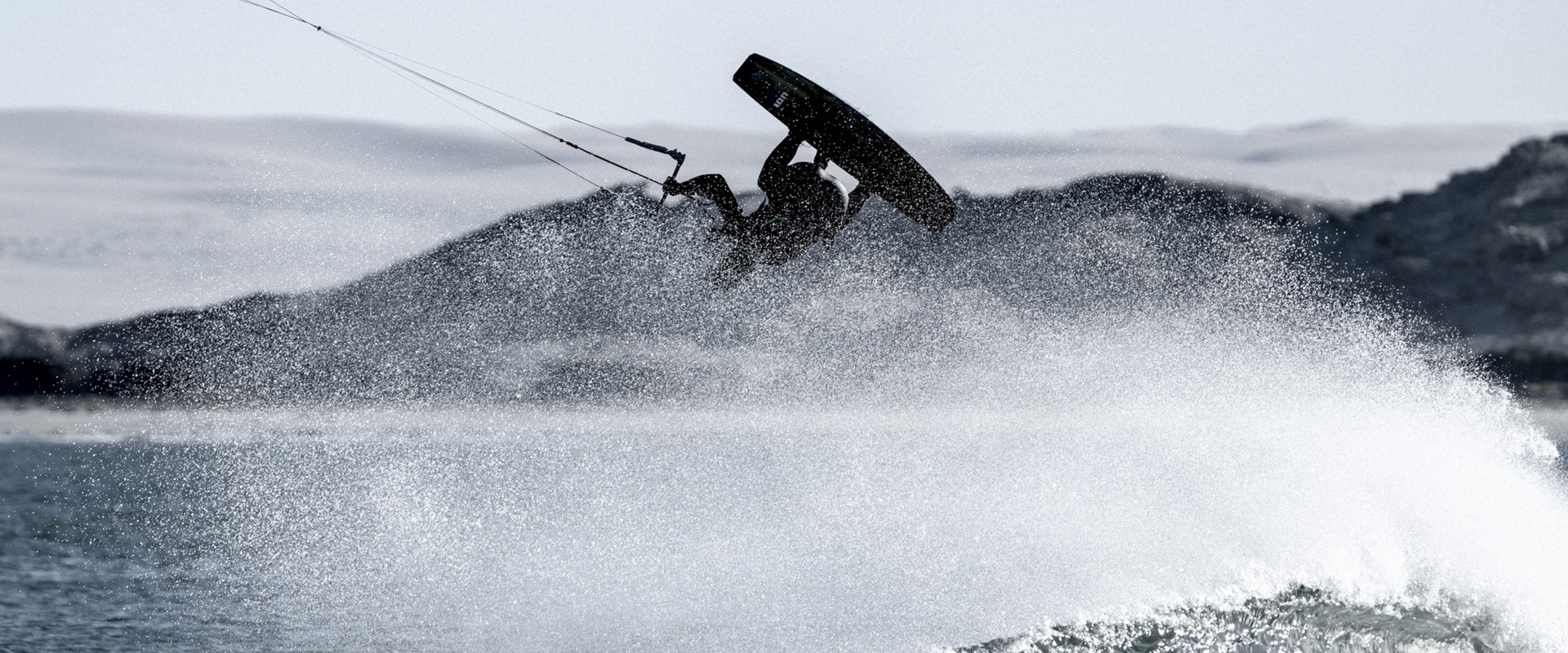
Kitesurfer jumping with a kiteboard in front of a wave

Your first kiteboard after lessons

A forgiving freeride twintip is a good choice when you're starting out. You can ride it in both directions without changing your foot position every time you turn. That leaves you free to focus on your riding technique, going upwind and your first transitions.

Perhaps you already got on well with a particular board during your lessons. Its model, length and width are a useful starting point. A slightly larger board can help you get planing more easily, but it should still be manageable when the wind picks up.

There's no need to switch to a directional as you progress. Experienced kiters also ride twintips for freeride, freestyle and big air. A waveboard becomes an option when you specifically want to ride waves.

What size kiteboard is right for you?

The right board size depends on your weight, riding ability and the wind at your spot. Length and width both matter: more surface area often helps you get planing earlier, while a narrower board can be easier to control on its edge in stronger wind.

As a rough guide, we recommend a 134–138 cm twintip for beginners weighing up to around 70 kg, and generally 138–144 cm above 70 kg. Significantly heavier riders may benefit from more surface area. Always consider the board's width and the manufacturer's sizing advice too.

Larger boards and extra-wide light-wind boards, often called doors, make those first planing runs easier, which is why kite schools frequently use them. A door can remain useful as your light-wind board later on. Once you're riding confidently, a smaller board within your suitable size range may appeal, as long as it still gets you planing reliably at your spot. If you're unsure, we're happy to help you choose.

Freeride, jumps or waves: how do you want to ride?

For relaxed freeride sessions, look for a board that's comfortable and easy to control. For jumping and freestyle, edge grip, pop and landing characteristics become more important. The most performance-focused model isn't automatically the best board for your next step.

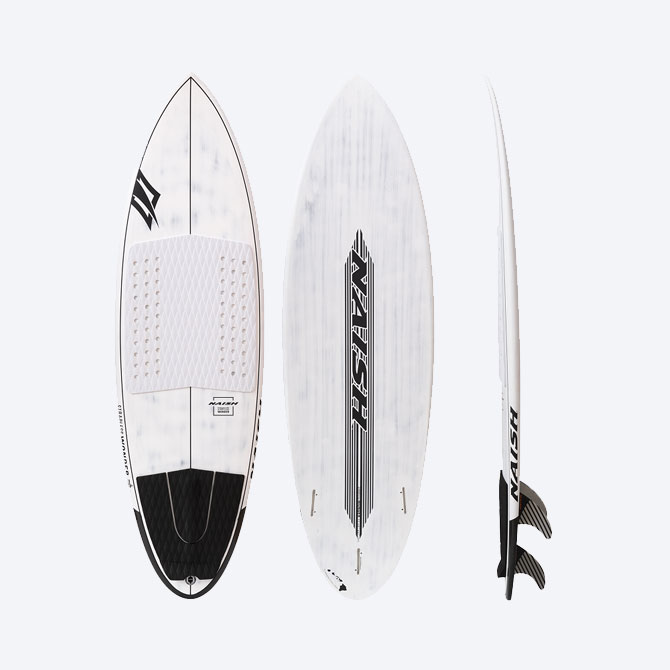
A wider light-wind board can be a useful addition to your setup when the breeze is light. If you want to ride waves, take a look at our waveboards. They have a defined nose and tail and ride differently from a twintip. For kitefoiling, you'll need a board with a suitable foil mount.

How rocker and flex affect your ride

Rocker is the board's lengthwise curve. A flatter shape often helps with early planing. More rocker can feel smoother in chop and on landings, but usually needs a little more power to get going.

Flex describes how much the board bends under load. A comfortable flex pattern can absorb impacts. A stiffer board can feel more direct and support a powerful take-off. The feel also depends on your weight and the board's overall construction.

So don't choose solely on carbon construction or low weight. What matters is whether the board's handling suits you and your sessions.

Choosing a board, bindings and accessories that work together

The right board is even more enjoyable with well-fitting bindings. Pads and straps should fit your feet and hold them securely without uncomfortable pressure. If you often ride in neoprene boots, allow for them when choosing and adjusting your bindings.

Check what's included: do the bindings, handle and fins come with the board, or are they sold separately? At Surfpirates, you'll also find boards complete with bindings and a handle. That's particularly handy when you're putting together your first setup.

Want to keep using your current bindings? The mounting points and screws need to fit the new board. Give us the exact model names and we'll help you check. A suitably sized boardbag is also useful for transport and storage.

Choosing your kiteboard at Surfpirates

Our range includes kiteboards from Duotone, F-One, Cabrinha, North, Core and Naish. Choose according to the intended use and the individual model. Your board doesn't have to be the same brand as your kite.

Our used gear section is worth a look too. Depending on availability, you'll find used kiteboards and demo gear, including beginner-friendly models. Each listing describes the condition and what's included.

Still unsure which board is right for you? Tell us where you kite, how much you weigh and what you can already do confidently. If you have a board, send us its model and size too. That helps us give you specific advice.

Kiteboard FAQs

What kiteboard do I need as a beginner?

A forgiving freeride twintip usually makes sense for your first independent sessions. It rides in both directions and can take you through your first jumps too. Its size and width should suit your weight, riding level and wind conditions. A board you enjoyed using during lessons is a helpful starting point.

Should I get a bigger or smaller kiteboard?

More surface area often makes it easier to get planing and keep going through lulls. A smaller or narrower board can be easier to control in stronger wind, but usually needs more pull to get going. Alongside length and width, the board's shape and your ability matter too. Compare sizes within a suitable model rather than looking only at the length in centimetres.

Will I quickly outgrow a beginner board?

A well-chosen freeride board can still suit you as you gain experience. It can handle confident upwind riding, transitions and your first jumps. A very large school board may become unwieldy in stronger wind, but can still be useful for light-wind sessions. A change makes most sense when you know which handling characteristics you're missing.

Is one kiteboard enough for all wind conditions?

A versatile twintip can cover many of your usual sessions if its size and shape suit your weight and spot. A larger light-wind board can help in very light wind, while some riders prefer a smaller board in strong wind. Whether you need a second board depends on how much your conditions vary and which kite sizes you ride.

What should I check when buying a used kiteboard?

Look closely at the base and edges. Surface scratches are only cosmetic. The outer skin needs to be intact: deep scratches, cracks or open edges can let water into the board. Check the binding screws and the threads in the board too. Repeatedly fitting and removing screws can wear the threads. The screws should thread in smoothly and tighten securely without spinning freely. Also check whether fins, a handle, pads and straps are included.

Do you ride a waveboard with or without straps?

Both are possible if the board is designed to take straps. Straps help hold your feet in place, for example in chop or when jumping. Riding without them, or strapless, lets you adjust your foot position more freely while riding and on a wave. Keeping the board under your feet during waterstarts and in rough water takes some practice. If you'd like to try both, look for a board with suitable strap mounting options.

Loading ...
Surfpirates Pirates Week from November 20–30, 2026: Extra discounts on many sale items and 15% off RRP, automatically applied at checkout – no discount code needed. Excludes Duotone, Core and Sabfoil. Shop the deals now.